
Continuous production review for oil operators
The oilfield never stops changing.Its engineering picture should not wait.
FieldState continuously reviews production history across every well, qualifies material changes, and turns them into evidence-backed, engineer-owned next actions.
It works on top of existing production data and engineering tools, keeping the full producing portfolio visible between deep reviews without replacing engineering judgment.
01
One coverage model. Any portfolio scale.
FieldState keeps the full producing population visible between deep reviews, from one asset to a dispersed multi-asset portfolio.
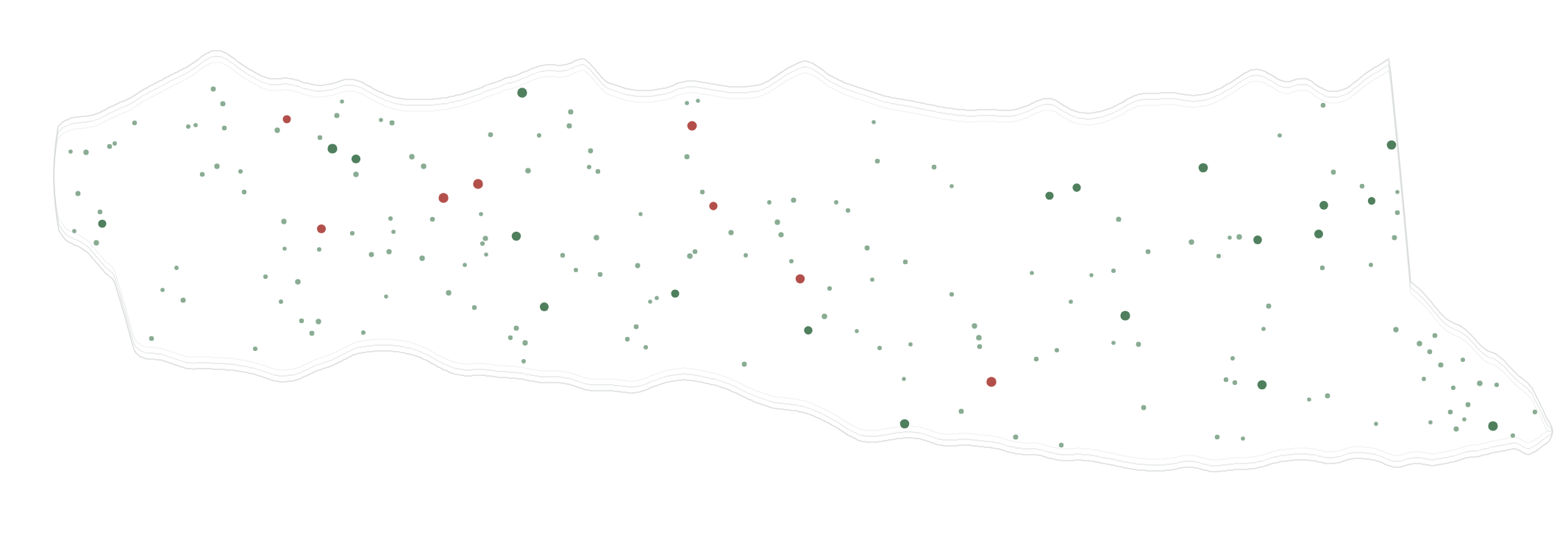
195wells · 1 assetCurrent source-brief view · ~20 in deep review · 8 qualified for action review 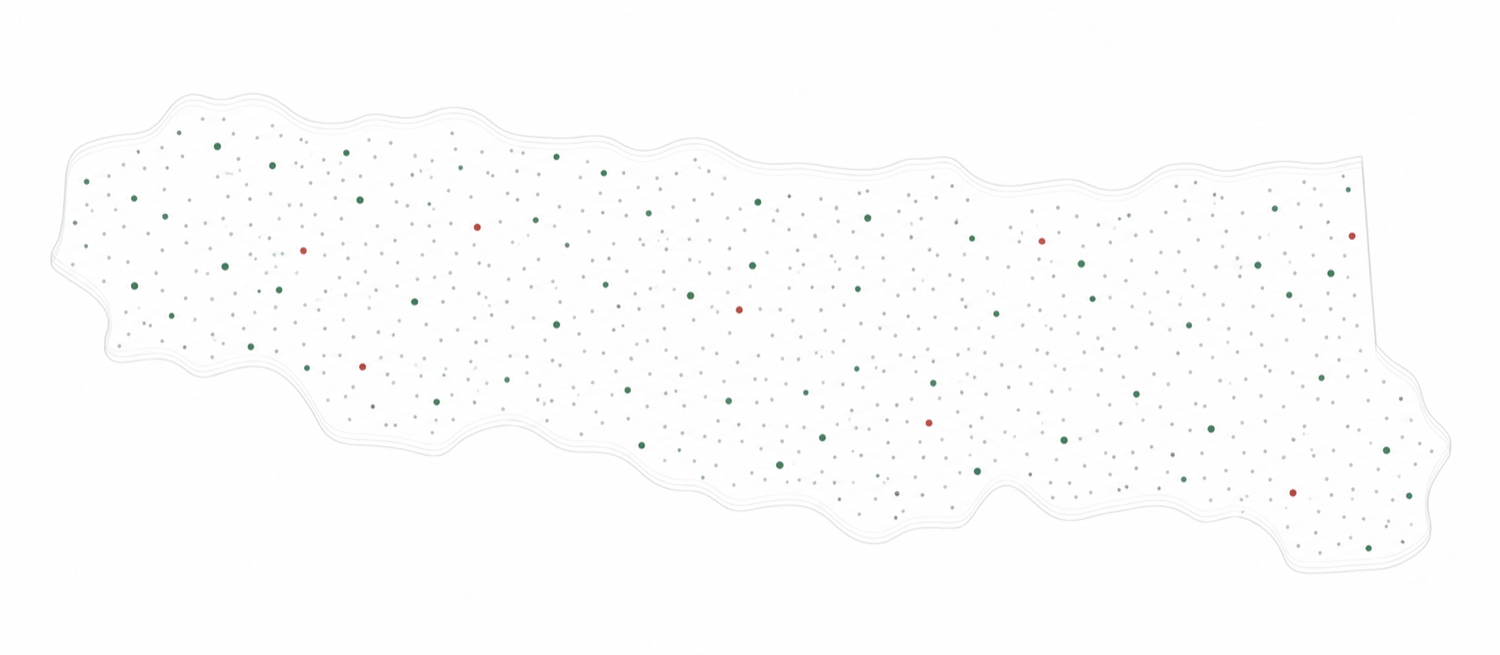
500wells · 1 assetIllustrative single-asset scale 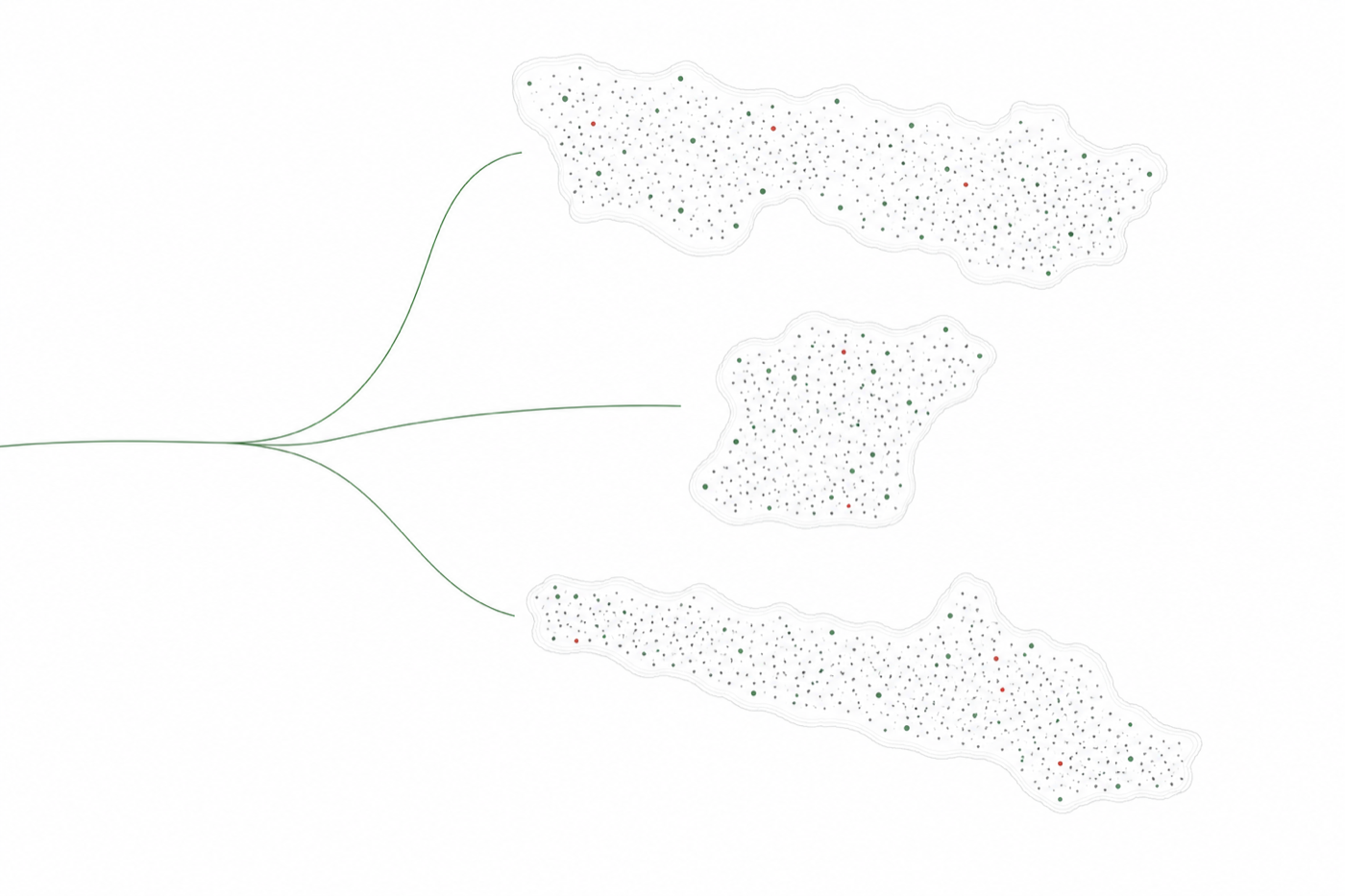
2,500wells · 3 dispersed assetsIllustrative multi-asset scale


Illustrative portfolio scale scenarios — 500 and 2,500 show only scale and asset dispersion, not screening, review, value, or operational results.
02
Turn a portfolio signal into a decision-ready well case
One traceable path from observed production behavior to a validation step, expected impact, and accountable owner.
The chart shows how observed production departs from the depletion baseline and where a material signal merits attention. The dossier turns that signal into a testable hypothesis and the evidence required before an engineer approves action.
Evidence when it matters. An owner for what happens next.
What you get
- Earlier detection of material changes.
- More confident decisions, with less effort.
- Measurable value from engineered actions.
Illustrative review state
Decision dossier
- Observation
- Production behavior diverges materially from the depletion baseline.
- Working hypothesis
- A recoverable production impairment requires field evidence.
- Expected impact
- +145 BOPD
- Risked NPV
- $1.6M
- Next validation step
- Integrity and pressure check
- Owner
- Production Engineering
The operating method
One asset truth.Deeper intelligence as evidence improves.
We start from production data to establish a governed asset state. The same state progressively deepens as more evidence arrives - without restarting the foundation or creating disconnected analyses.
Same state. Deeper evidence.
Each layer adds a different kind of proof while preserving the same governed asset history.
Illustrative engineering review from the FieldState V12 source brief. Values are examples, not customer results.
- 01
What changed?
Production truth
Establish a trusted production baseline from the data already available.
- Trusted history and identity reconciliation
- Qualified decline and do-nothing forecast
- First NPV, economic limit, and deferred-production view
Data quality
- Assessment
- 92%Good
Baseline summary
- First NPV
- $24.6M
- Econ. limit
- 120 BOPD
- 02
What may explain it?
Operational causality
Separate operational loss from normal reservoir behavior.
- Event verification and downtime attribution
- Recoverable operating-loss identification
- Scenario cash flow for candidate actions
Recoverable loss
- Avg. potential
- +1,850 BOPD
Candidate actions
- 01
- ESP replacement
- 02
- Sand control review
- 03
- Injection support
- 03
Is it recoverable?
Reservoir awareness
Deepen the same state with pressure, injection, and surveillance evidence.
- Connectivity and pressure-support signals
- Field-level behavior and recovery uncertainty
- Reservoir-linked economics and prioritization
Field recovery (P50)
- Expected recovery
- 36%+5 pts vs baseline
Decision range
- Uncertainty
- ±6 pts
- Priority score
- High
- 04
What happens next?
Integrated optimization
Connect subsurface, wells, and facilities into action-ready optimization.
- Feasible action ranking with constraints
- Nodal, equipment, and surface bottleneck logic
- Risk-adjusted decisions and expected response
Constraint check
- Surface capacity
- Pass
- Injection capacity
- Pass
- Power
- Review
- Water handling
- Review
- Well slots
- Pass
Pricing
Pricing.
Report examples
From production history to the next action.
FieldState keeps the conclusion, supporting evidence, and engineering basis together in one review.
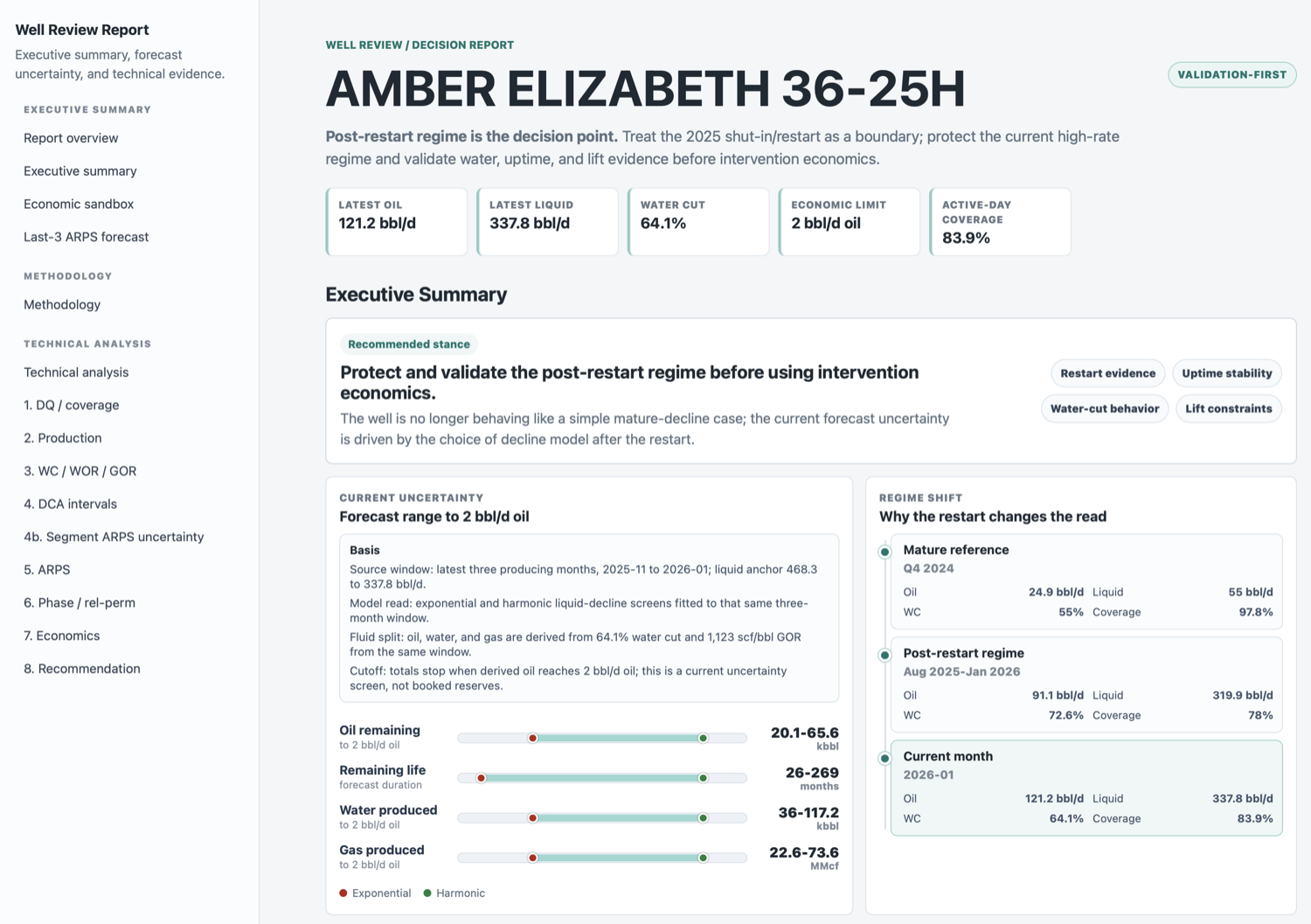
Executive summary
Recommended stance, headline KPIs, uncertainty, and the evidence required before action.
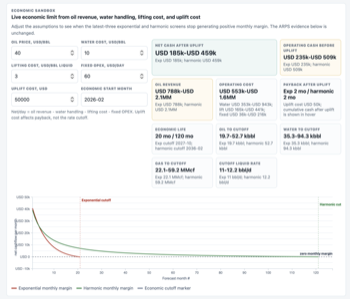
Economic assumptions
Operator-controlled price, cost, intervention, and economic-limit inputs with a live decision screen.
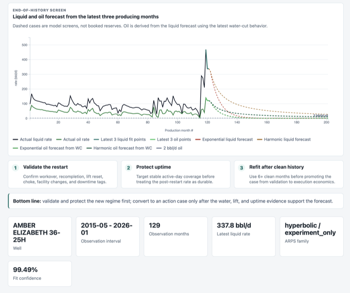
Latest-three-month forecast
A short decline screen with explicit validation guardrails before intervention economics.
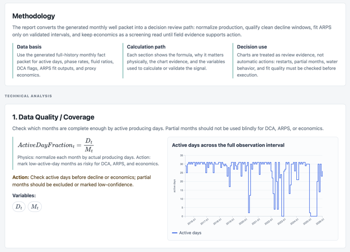
Methodology and data quality
The calculation path, evidence boundaries, and active-day coverage behind the review.
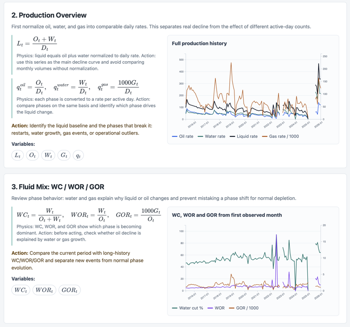
Production and fluid mix
Normalized oil, water, gas, producing days, water cut, WOR, and GOR in one engineering read.
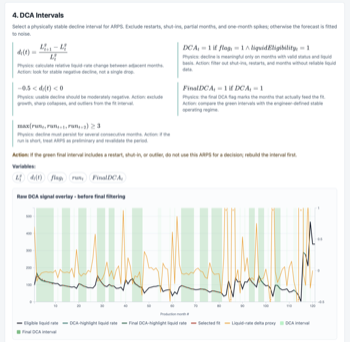
Decline interval selection
Restarts, partial months, and unstable periods remain visible before a decline interval is trusted.
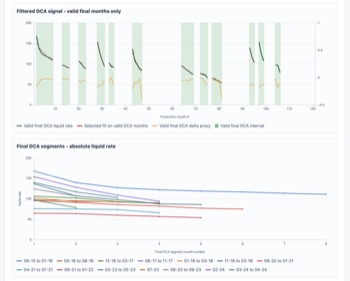
Historical decline segments
Qualified historical segments are compared before selecting the forecast basis.
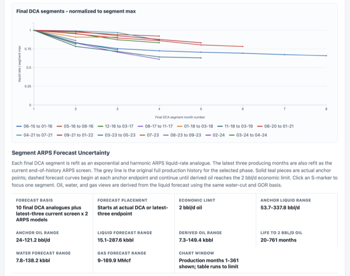
Forecast uncertainty
The range across qualified segments stays explicit rather than collapsing into one point estimate.
Illustrative report excerpts from the FieldState product memo. Values are examples, not customer results.
Why this is different
Why this is not another tool in the stack
Production recovery without another disconnected tool.
- 01Works on top of existing databases, engineering tools, and reports.
- 02Keeps one continuously refreshed decision state.
- 03Makes physics, economics, and assumptions explicit.
- 04Improves as actual outcomes return to the model.
FieldState closes the gap between continuous field change and periodic deep review.